Casino Table RFID Upgrade: Retrofitting Existing Tables with Sensors
最后更新于:2026-06-15 17:14:48
Many casino operators face a common dilemma: they have a floor full of high-quality traditional tables that still have years of useful life, but they want the operational intelligence and revenue protection benefits of RFID tracking. Replacing all tables outright is expensive and disruptive. Retrofitting existing tables with RFID sensor systems offers a compelling alternative — upgrading the tables you already own rather than discarding them.

This upgrade path is technically feasible, but it requires careful planning, precise engineering, and a clear understanding of the trade-offs involved. Done well, a retrofit delivers most of the benefits of new RFID tables at a fraction of the cost. Done poorly, it creates a maintenance nightmare and compromises the very data quality the operator is trying to achieve.
Understanding the Retrofit Architecture
Retrofitting a casino table with RFID capability means installing an antenna array beneath the table surface, connecting it to RFID readers and a processing unit, and integrating the system with the casino’s backend infrastructure. The retrofit must be accomplished without compromising the table’s structural integrity, playability, or aesthetic appearance.
Core Components of a Retrofit System
A typical retrofit kit includes:
– **Antenna pads or flexible antenna sheets** that are installed beneath the table felt. These may be rigid antenna elements mounted to a backing board or flexible printed antennas that conform to the table surface contour.
– **RFID reader modules** that drive the antenna array and process tag responses. Readers may be mounted under the table, inside the table cabinet, or in a nearby equipment rack.
– **Processing unit** that aggregates data from the readers, filters and validates reads, and transmits the data to the backend system. This unit may be a dedicated appliance or a software application running on existing pit hardware.
– **Power and data cabling** that connects all components and integrates with the casino’s network infrastructure.
– **Mounting hardware and enclosures** that secure the components and provide physical protection.
Installation Approaches
Two primary approaches dominate the retrofit market:
**Felt-replacement retrofit**: The existing table felt is removed, the antenna array is installed directly on the table surface or on a thin substrate layer, and new felt is installed over the antennas. This approach preserves the original table structure and provides excellent antenna-to-chip proximity, maximizing read performance. The downsides are that the table is out of service during the retrofit, and the new felt must be perfectly aligned to avoid signal attenuation at seams or overlaps.
**Under-table retrofit**: Antenna arrays are mounted beneath the table surface, either by cutting access panels in the table cabinet or by installing the antennas on a tray that slides under the table. This approach avoids removing the felt and can be less disruptive to table operations. However, the increased distance between antennas and chips can reduce read performance, particularly for low-power RFID tags or dense chip stacks.
Evaluating Retrofit Feasibility
Not every table is a good candidate for retrofit. Before committing to a retrofit program, conduct a systematic feasibility assessment across your table inventory.
Table Construction Analysis
The physical construction of the existing tables determines retrofit complexity and cost. Tables with solid wood or composite surfaces are easier to retrofit than tables with metal-reinforced surfaces that attenuate RFID signals. Tables with accessible under-table space simplify antenna installation. Tables with integrated electronics (LED displays, automated shufflers, electronic betting displays) may create electromagnetic interference that degrades RFID performance.
Disassemble one representative table from each model in your inventory and inspect the construction. Measure the distance from the expected antenna mounting position to the chip betting surface. Evaluate the available space for reader modules and cabling. Identify potential sources of interference such as metal table components, existing wiring, or adjacent electronic equipment.
Antenna Coverage Requirements
Determine the required antenna coverage based on your tracking objectives. If you only need to track chip presence at each player position, a simple antenna per position may suffice. If you need to track precise chip locations across the entire betting surface, a denser antenna array or even a full-surface flexible antenna sheet is required.
Map the betting surface for each game type and mark the areas that must be covered. Compare this coverage map to the physical constraints of the table. Some table designs have irregular betting surfaces, recessed areas, or multi-level surfaces that complicate antenna placement. These tables may require custom antenna designs that increase retrofit cost and complexity.
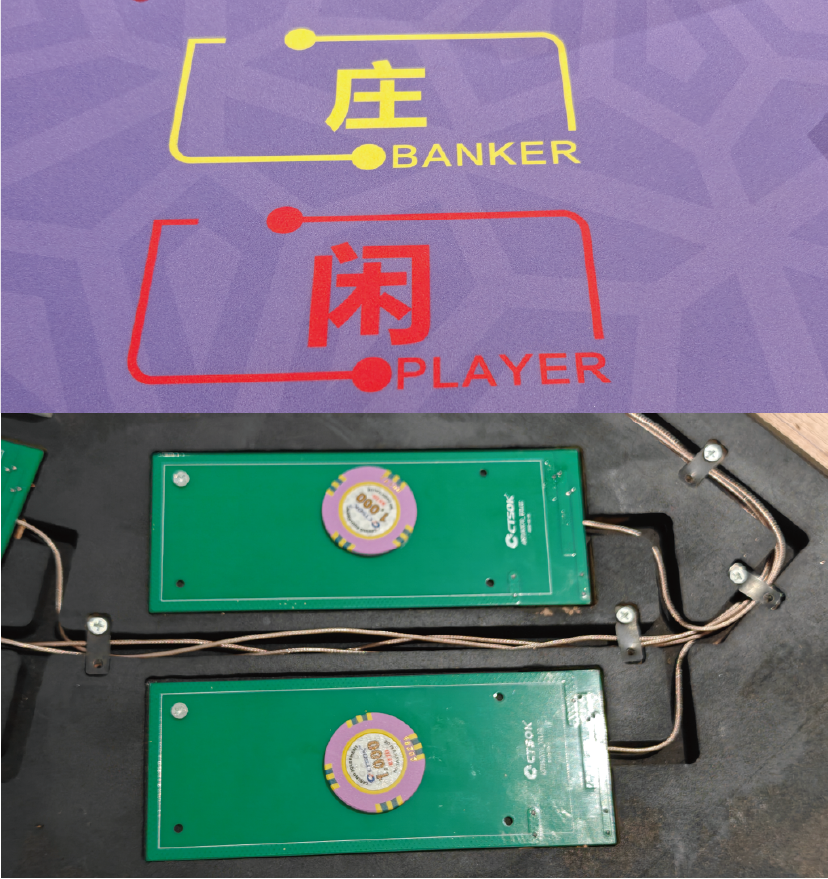
Signal Interference Assessment
RFID systems operate in the 13.56 MHz high-frequency band for most casino applications. At this frequency, metal objects within 5 to 10 centimeters of the antenna can significantly degrade performance. Conduct signal testing on a sample table before finalizing the retrofit design. Place representative metal objects (chip trays, ashtrays, drink holders) in their normal positions and measure the effect on read range and accuracy.
If interference is detected, the retrofit design must either relocate the interfering objects or shield the antennas from their influence. Shielding adds cost and may not be fully effective. Relocating objects may require modifying the table structure, which adds to the retrofit scope.
The Retrofit Process: Step by Step
A structured retrofit program minimizes disruption to casino operations and ensures consistent results across all retrofitted tables.
Step 1: Pilot Retrofit on a Single Table
Select one table of each model type for a pilot retrofit. The pilot serves multiple purposes:
– Validates the retrofit design under real-world conditions
– Identifies unforeseen installation challenges
– Establishes the actual time required per table
– Provides a reference for training the installation team
– Generates performance data to validate read accuracy and reliability
Run the pilot table in live operations for at least two weeks before proceeding with additional tables. Monitor read accuracy, system stability, and staff feedback continuously during this period.
Step 2: Refine the Retrofit Kit and Process
Based on pilot results, refine the antenna layout, cabling approach, and installation procedures. Common refinements include:
– Adjusting antenna positions to eliminate dead zones
– Adding shielding to reduce interference from table hardware
– Simplifying cable routing to reduce installation time
– Updating the installation checklist to include lessons learned
Document all refinements in updated retrofit kit specifications and installation manuals. These documents become the standard for all subsequent retrofits.
Step 3: Train the Installation Team
Retrofit installation requires a combination of carpentry skills, electronics knowledge, and quality control discipline. Train the installation team thoroughly on:
– Safe disassembly and reassembly of table components
– Proper antenna placement and securing techniques
– Cable management and strain relief practices
– Electrical testing and verification procedures
– Final inspection and acceptance testing protocols
A well-trained team installs tables faster, with fewer defects, and with less risk of damaging the existing table structure.
Step 4: Execute the Retrofit Program
Schedule retrofits to minimize floor disruption. The most common approach is to retrofit tables during off-peak hours or during planned floor maintenance periods. A typical retrofit takes four to eight hours per table, depending on complexity.
For each table, the installation sequence is:
1. Remove the table from the floor and transport it to the retrofit workspace
2. Disassemble the table following the documented procedure
3. Install antenna array and readers per the approved layout
4. Route and secure all cabling
5. Reassemble the table
6. Perform electrical testing and verify antenna functionality
7. Install new felt (if applicable)
8. Perform read accuracy testing with calibration chips
9. Document the installation and update asset records
10. Return the table to the floor and integrate with the backend system
Step 5: Validate and Accept
After installation, each table must pass acceptance testing before returning to live operations. Acceptance testing includes:
– Read accuracy testing across the entire betting surface with representative chip configurations
– Integration testing with the casino management system
– Stress testing under simulated peak gameplay conditions
– Documentation review to confirm all installation steps were completed Macaumr Casino Equipment.
Only tables that pass all acceptance criteria should be approved for live operations.
Performance Expectations for Retrofitted Tables
Retrofitted tables typically achieve read accuracy within 1 to 2 percentage points of new RFID tables — for example, 98.5 percent versus 99.5 percent. The performance gap is caused by less optimal antenna positioning, residual interference from table hardware, and the inability to optimize the table structure for RFID performance.
This performance difference is usually acceptable for most use cases. Revenue protection applications that tolerate occasional unread events work well with retrofitted tables. Applications that require 100 percent read accuracy, such as automated bet settlement or regulatory reporting that mandates complete data capture, may require new tables with purpose-built RFID integration.
Cost Analysis: Retrofit vs. New Purchase
Retrofitting costs range from $3,000 to $8,000 per table, depending on table complexity, antenna density, and installation labor rates. New RFID tables cost $15,000 to $35,000 per table. The retrofit saves 60 to 80 percent of the cost of new tables, making it an attractive option for large-scale deployments.
However, retrofitted tables have a shorter remaining useful life than new tables. If the existing tables have only two to three years of remaining life, the retrofit investment may not be justified. Evaluate retrofit economics based on the net present value of the benefits over the remaining table life, not just the upfront cost comparison.
Frequently Asked Questions
Can all existing casino tables be retrofitted with RFID, or are some table types incompatible?
Most traditional non-metal table designs can be retrofitted successfully. However, tables with extensive metal reinforcement, built-in electronic systems that generate electromagnetic interference, or irregular surfaces that prevent proper antenna placement may be poor candidates. Roulette tables with metal bowls and certain specialty game tables with complex surface geometries often require custom engineering or are not feasible for retrofit. A physical assessment of each table type in your inventory is essential before committing to a retrofit program.
How long does a typical retrofit take, and how many tables can be done simultaneously?
A standard retrofit takes four to eight hours per table for a trained two-person team. The actual time depends on table complexity, antenna density, and whether the felt must be replaced. For a large property, retrofitting five to ten tables per week is a realistic pace that minimizes floor disruption. Rushing the process increases the risk of installation errors that cause performance problems later. Schedule retrofits during low-occupancy periods and maintain a buffer of spare tables to keep the floor fully operational.
Does retrofitting void the original table manufacturer’s warranty?
This depends on the table manufacturer and the warranty terms. Some manufacturers explicitly void warranties if the table is modified by third parties. Others offer authorized retrofit programs that preserve warranty coverage. Before starting a retrofit program, review the warranty status of your tables and contact the manufacturer to discuss options. If warranty preservation is important, consider using the original manufacturer’s retrofit service or obtaining written consent for third-party retrofits that specifically preserves warranty coverage for non-RFID components.
What kind of maintenance do retrofitted tables require compared to new RFID tables?
Retrofitted tables require the same routine maintenance as new RFID tables — periodic antenna calibration, cable integrity checks, and software updates. However, they may have higher failure rates due to the less optimal integration of RFID components into an existing structure. Cable connections that were added during retrofit are more vulnerable to loosening from table movement and cleaning. Establish a preventive maintenance schedule that includes quarterly inspections of all retrofitted components, and train your maintenance staff to recognize early signs of RFID system degradation.
Can we retrofit tables in phases, starting with high-value tables and expanding later?
Yes, phased retrofitting is a common and recommended approach. Start with high-volume, high-limit tables where the revenue protection and operational efficiency benefits are greatest. Use the experience and performance data from the first phase to refine the process before expanding to additional tables. Phased deployment also spreads the capital cost over multiple budget cycles and allows you to validate the return on investment before committing to a full-floor rollout. Ensure that the RFID system architecture supports phased deployment without requiring a complete redesign between phases.